
Skip to content
Index
  1. Home1
  2. Workyou are here2
  3. What we do3
  4. About4
  5. Let’s talk5

Idilia Estudio · Celaya, Mexico · Texas, USA
20°31′ N, 100°49′ W

Fig. 1a

Pátzcuaro, Día de Muertos

Dos Caras · Pátzcuaro, Michoacán · October 2024

← Dos Caras

How do you bring to life a beloved Mexican celebration in a way that is genuine, beautiful and respectful? For us it was simple, by channeling our personal history.

Among the miscellany of Mexican sayings, “among flowers they welcome us and among them they send us off” stands as one of the phrases that best capture the spirit of Mexican culture: folklore, hospitality; a painting rich in textures; an intoxicating soundscape, polyphonic and visceral; a mysticism that flirts with the magical. That’s why defining Mexico in words is hard even for the most Mexican of us, and when an outsider attempts it, the challenge reaches new dimensions.
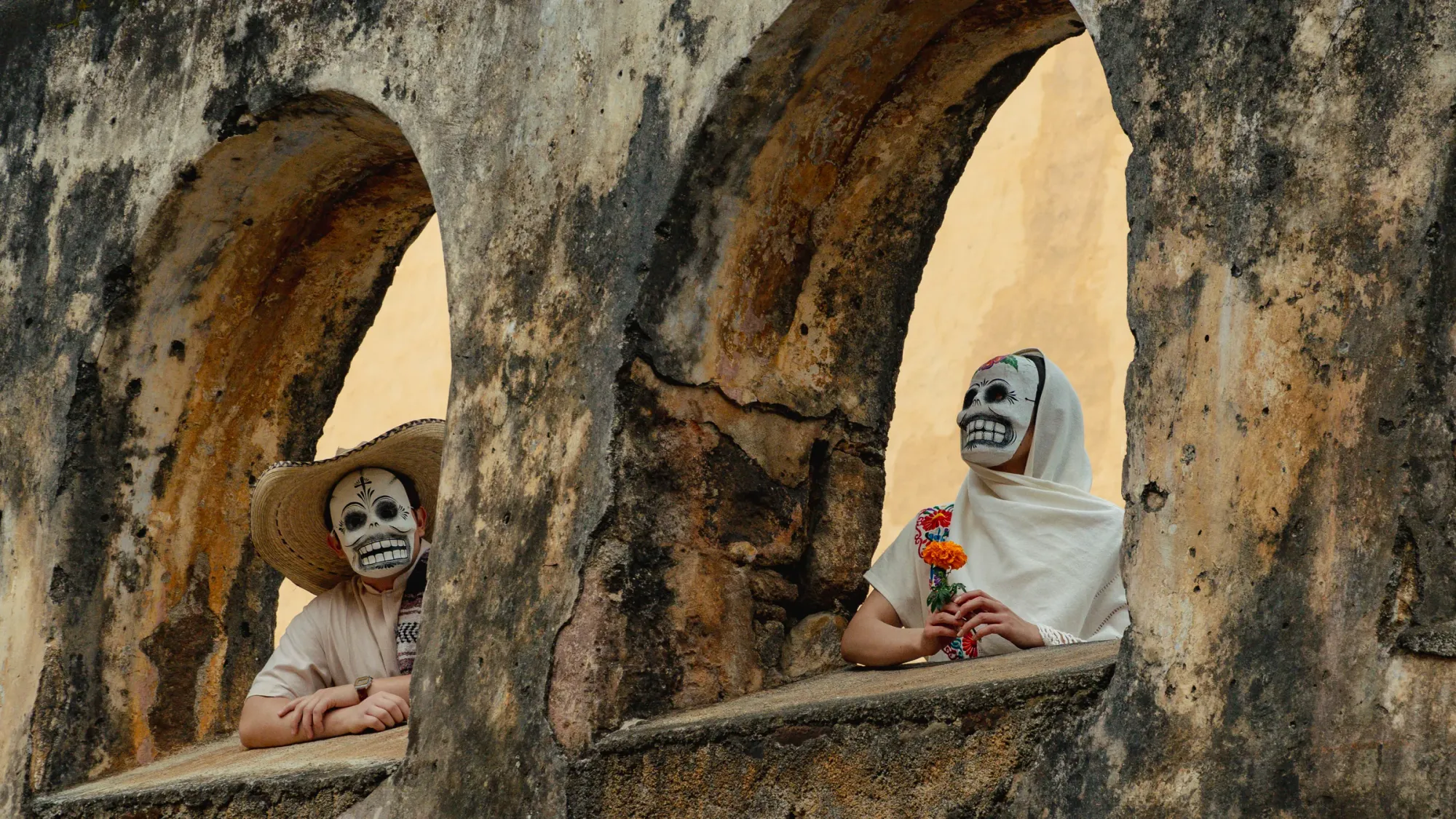
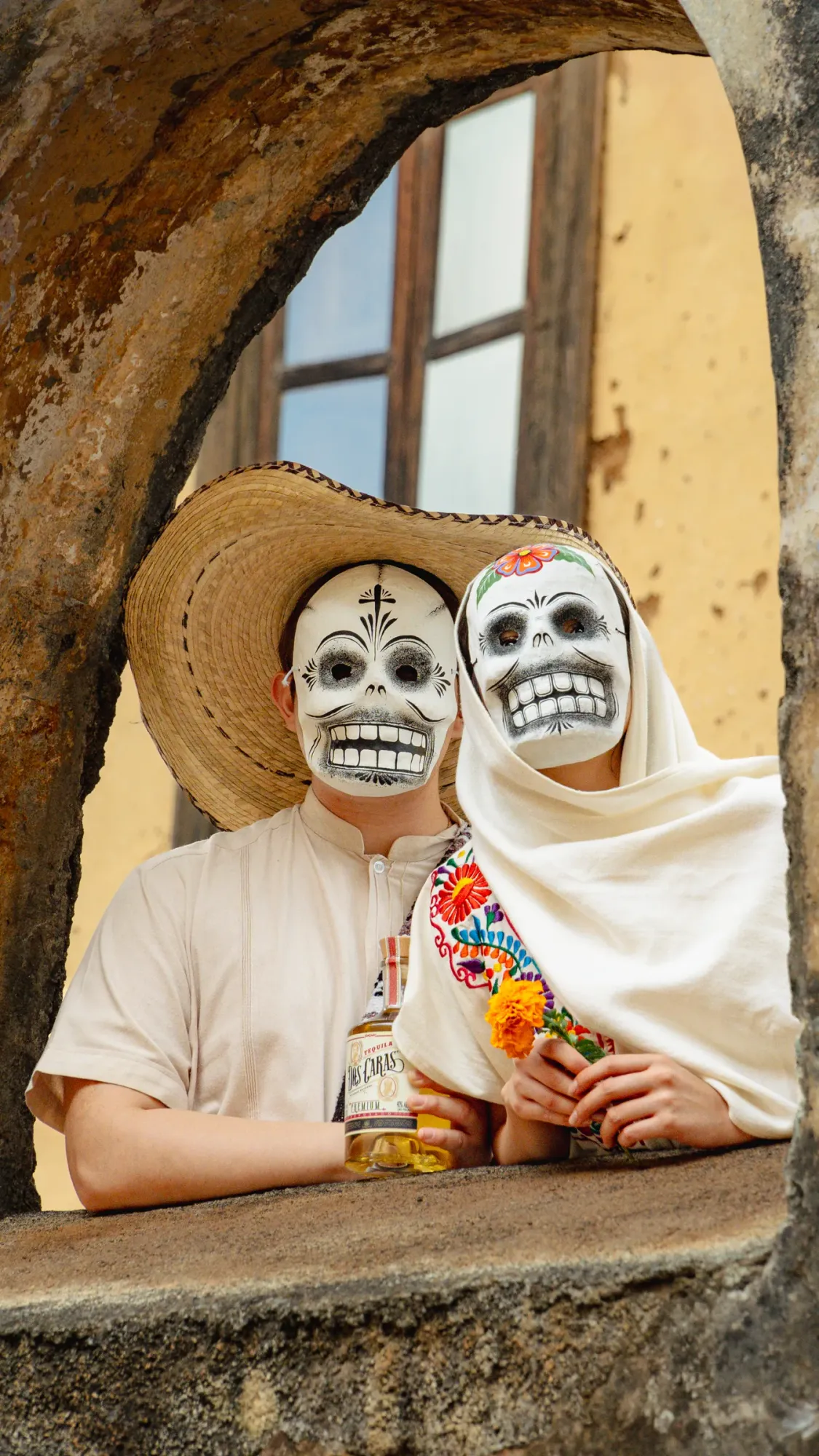
Two figures in skull masks under the arches of a house in Pátzcuaro

Produced in Arandas, Jalisco, Mexico, Tequila Dos Caras was born in and operates from Arizona, United States. Mexican blood beats in its heart and in its “soul” (core) lives a contradiction as fierce as it is familiar to those who inhabit (in body or in memory) both sides of the border. Commemorating Día de Muertos was essential to strengthen its perception as a Mexican-American brand that honors the connection between these two places through tequila.
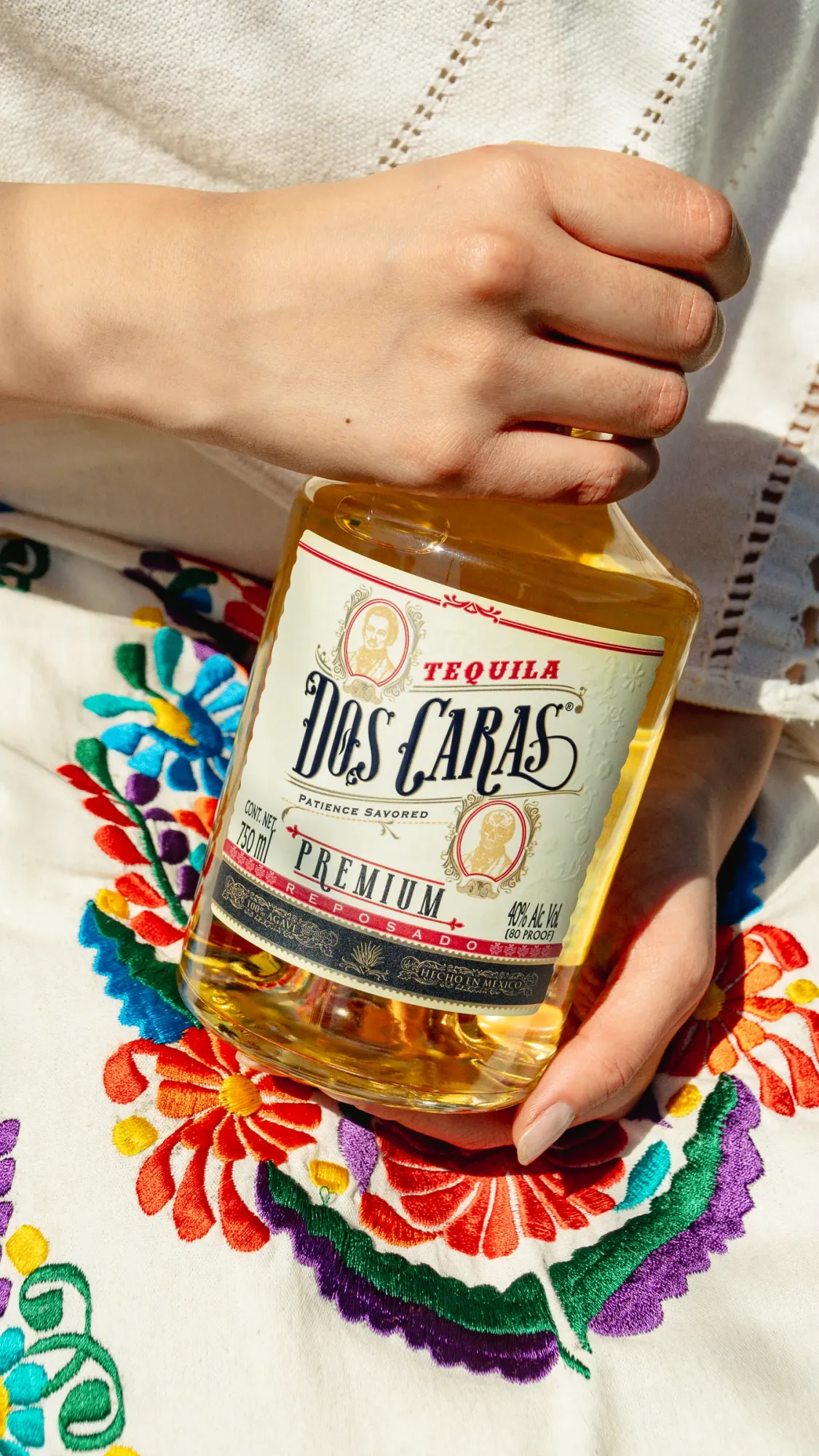
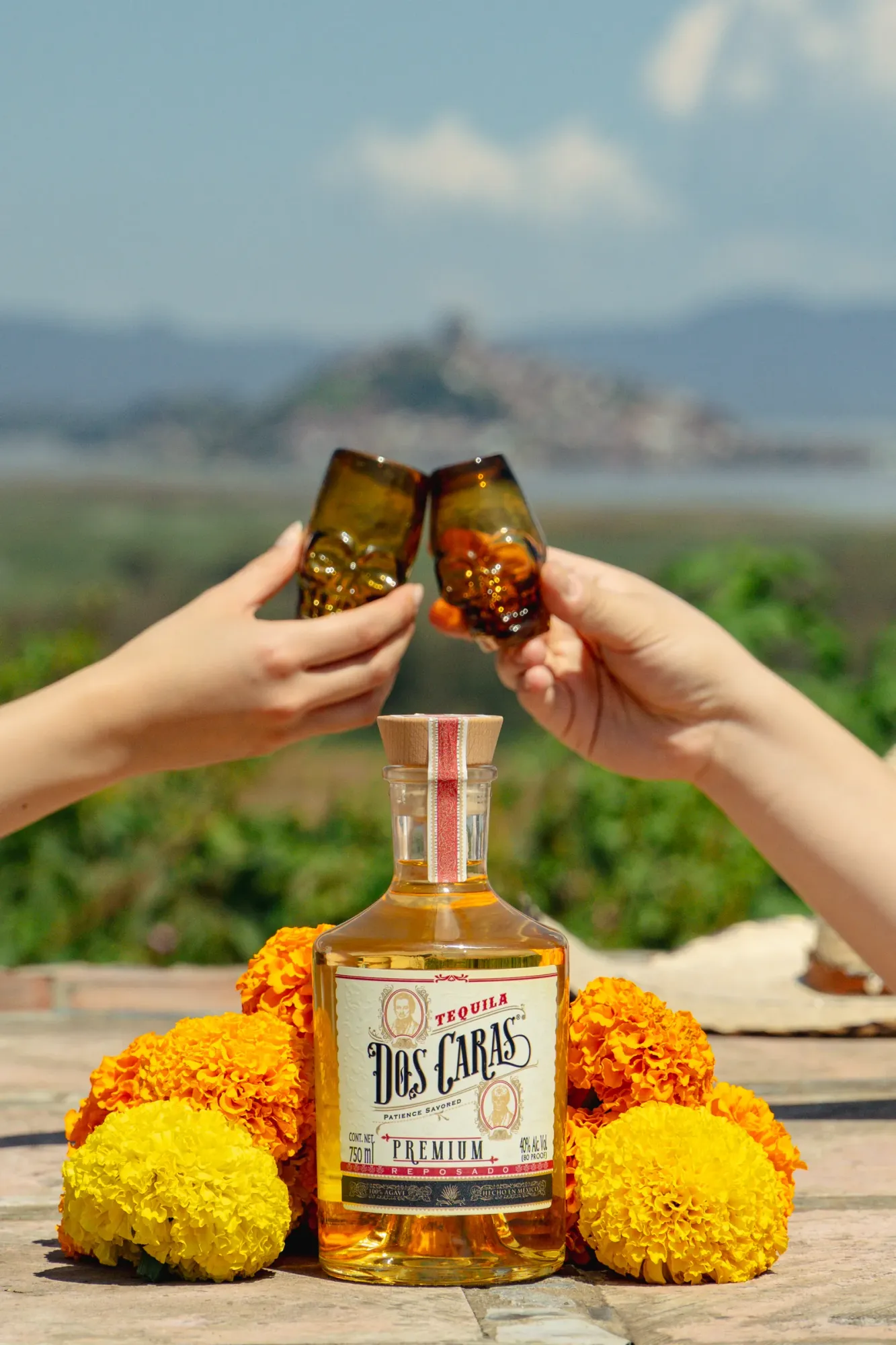
Hand holding a Dos Caras bottle over a flower embroidery A toast with caballitos over a Dos Caras bottle and cempasúchil, with Lake Pátzcuaro in the background

The photo and video production for Tequila Dos Caras around Día de Muertos took place in Pátzcuaro, Michoacán, home to one of the most emblematic expressions of this (internationally recognized) Mexican tradition. While we recognize that defining our experiences with a single word limits them, we can say that this project was about connections: those between both sides of the border; between the world of the living and the dead; and between the memories of the Idilia team and this region of the Michoacán lake.
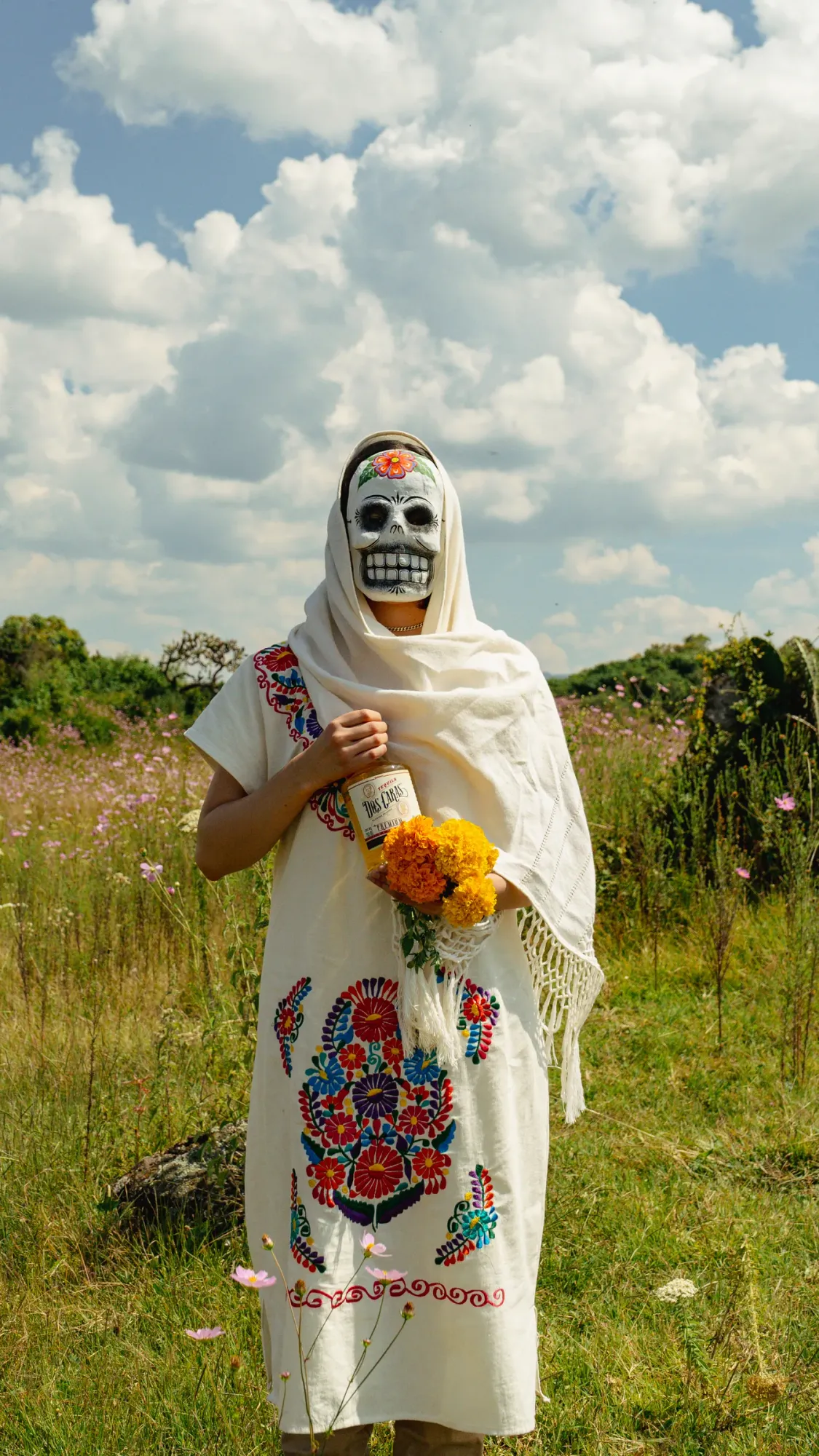
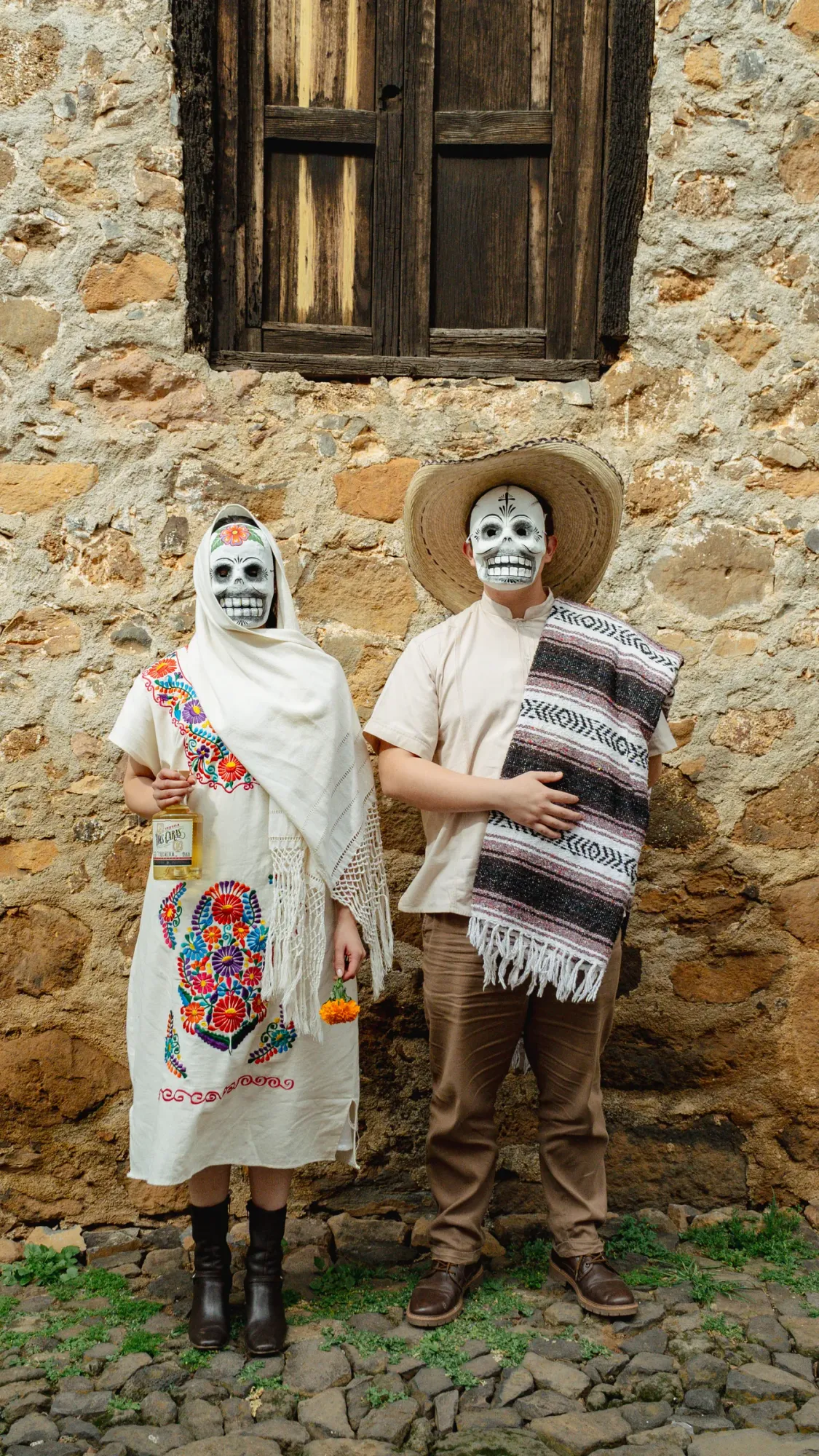
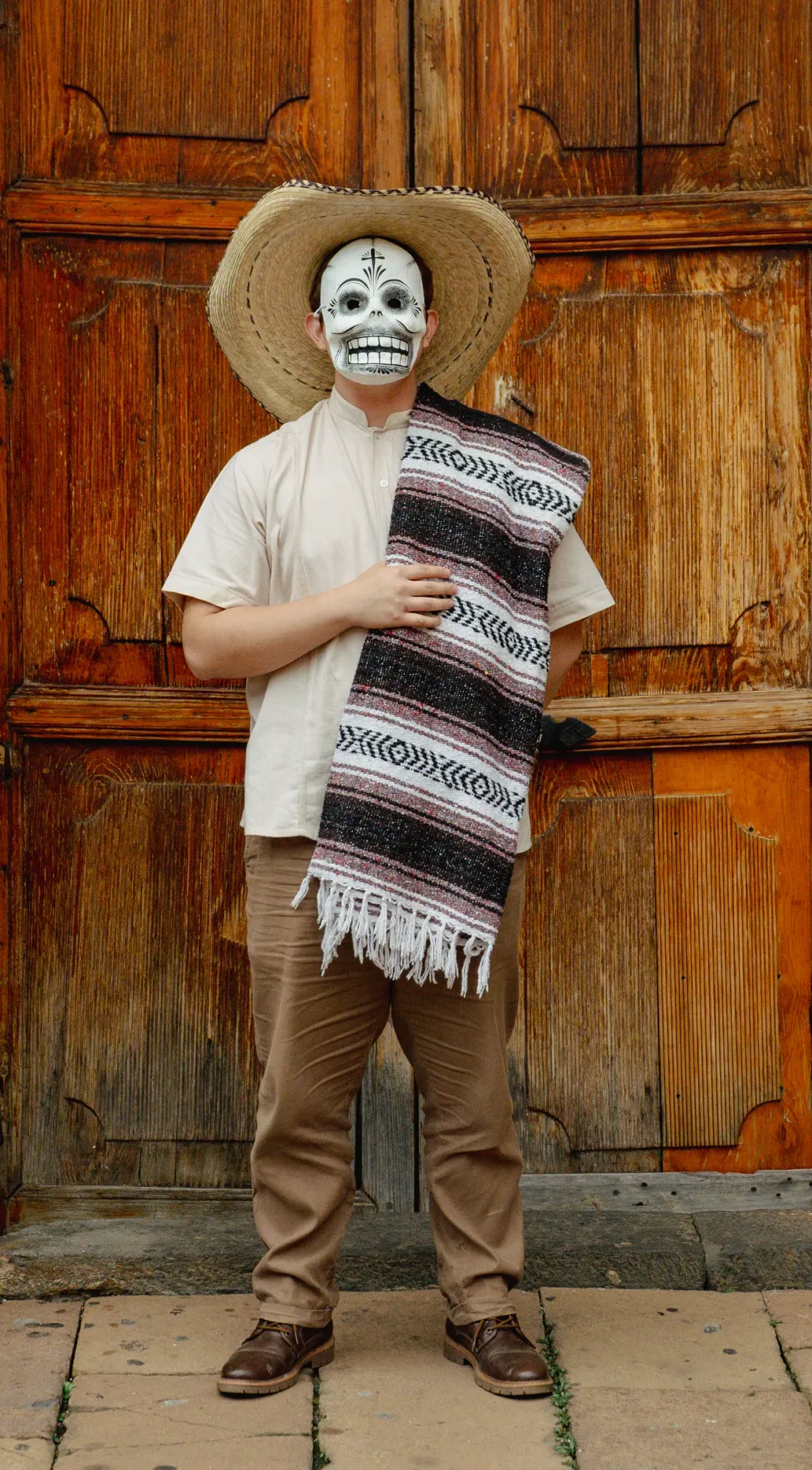
Figure in a skull mask and an embroidered rebozo in a field Two figures in skull masks in front of a stone wall Figure in a skull mask and a sarape in front of a wooden door

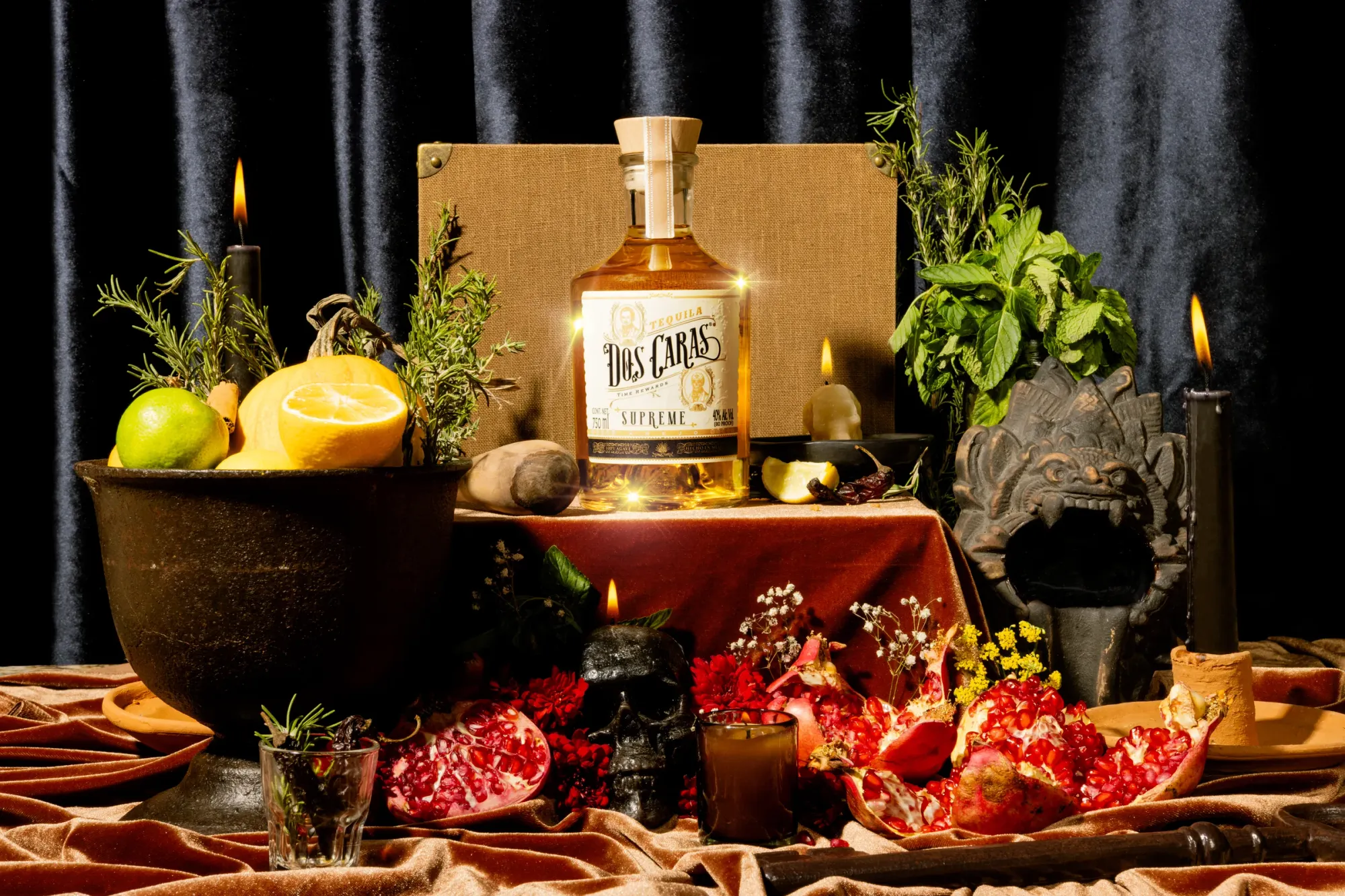
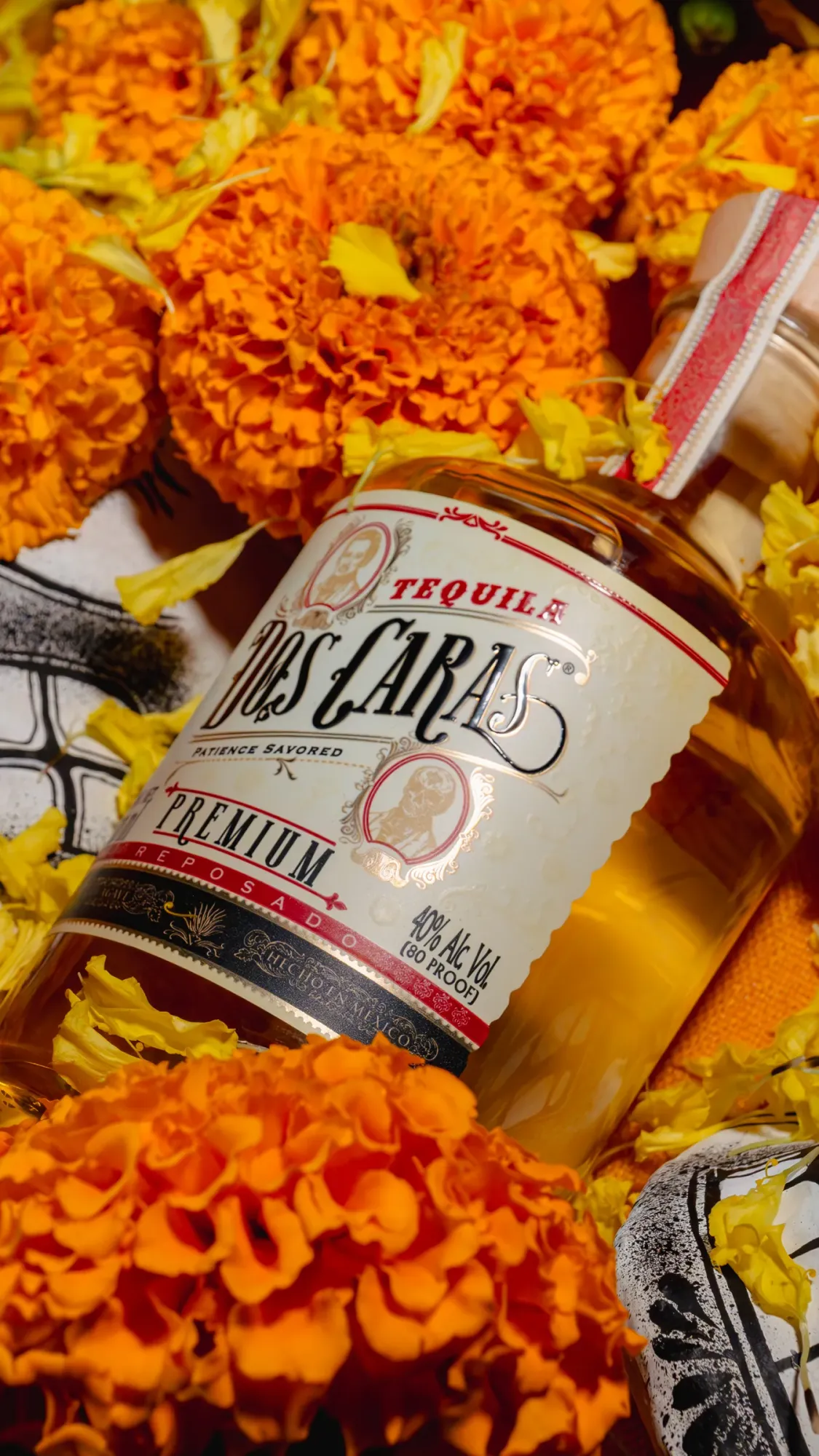
While one part of the team explored and captured the Mexican landscape, in the studio the traditional sawdust carpets came to life for a product photo session. These ephemeral, ceremonial works of art, built from geometric shapes, dyed wood shavings, fine sand and cempasúchil petals, symbolize the paths that guide souls from the beyond to the ofrendas and altars that await their arrival “on this plane”. At their center, where all paths converge, the tequila stood proudly, wrapped in the culture in which it thrives and which, at the same time, it shapes.
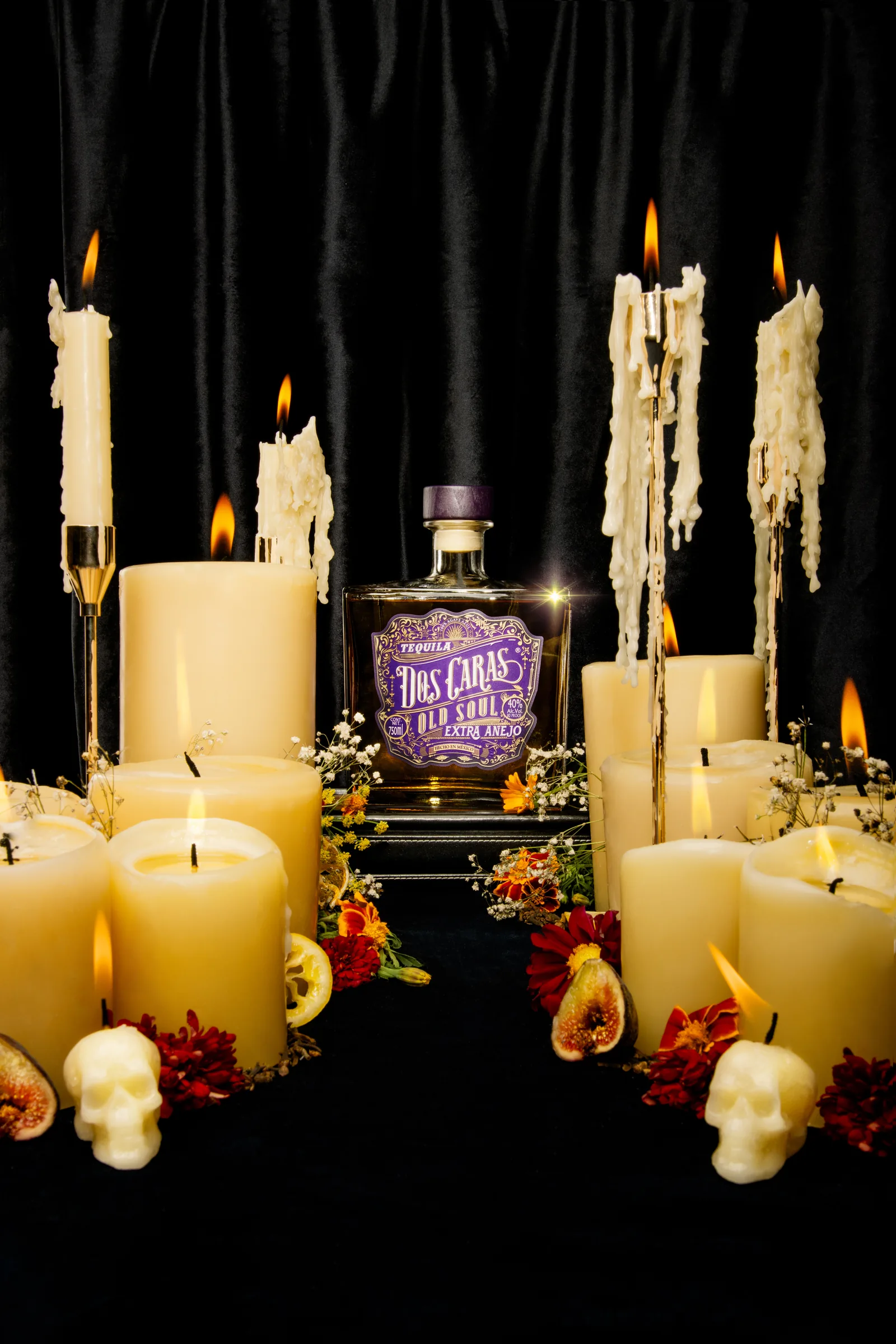
Dos Caras bottle among candles, Día de Muertos

Dos Caras bottle among cempasúchil petals Ofrenda with a Dos Caras bottle, pomegranates and citrus

These roads that connect us with our roots are the same ones that let our paths cross with brands with which we share not only ideals but heritage, whose stories touch our most sensitive fibers, revive our memories, move us and allow us to communicate how one lives, dreams and, fittingly for the occasion, dies and returns to life in Mexican.
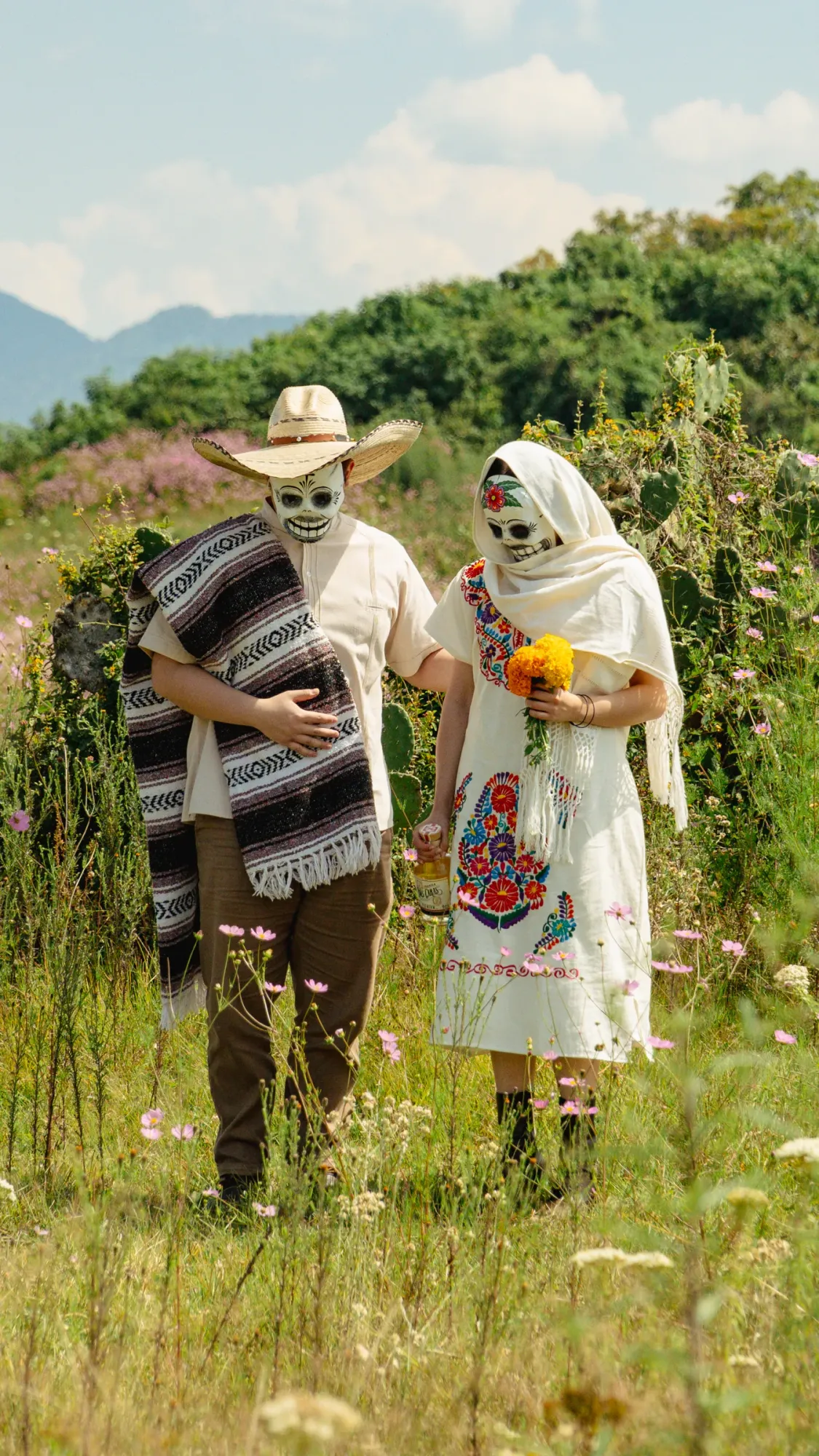
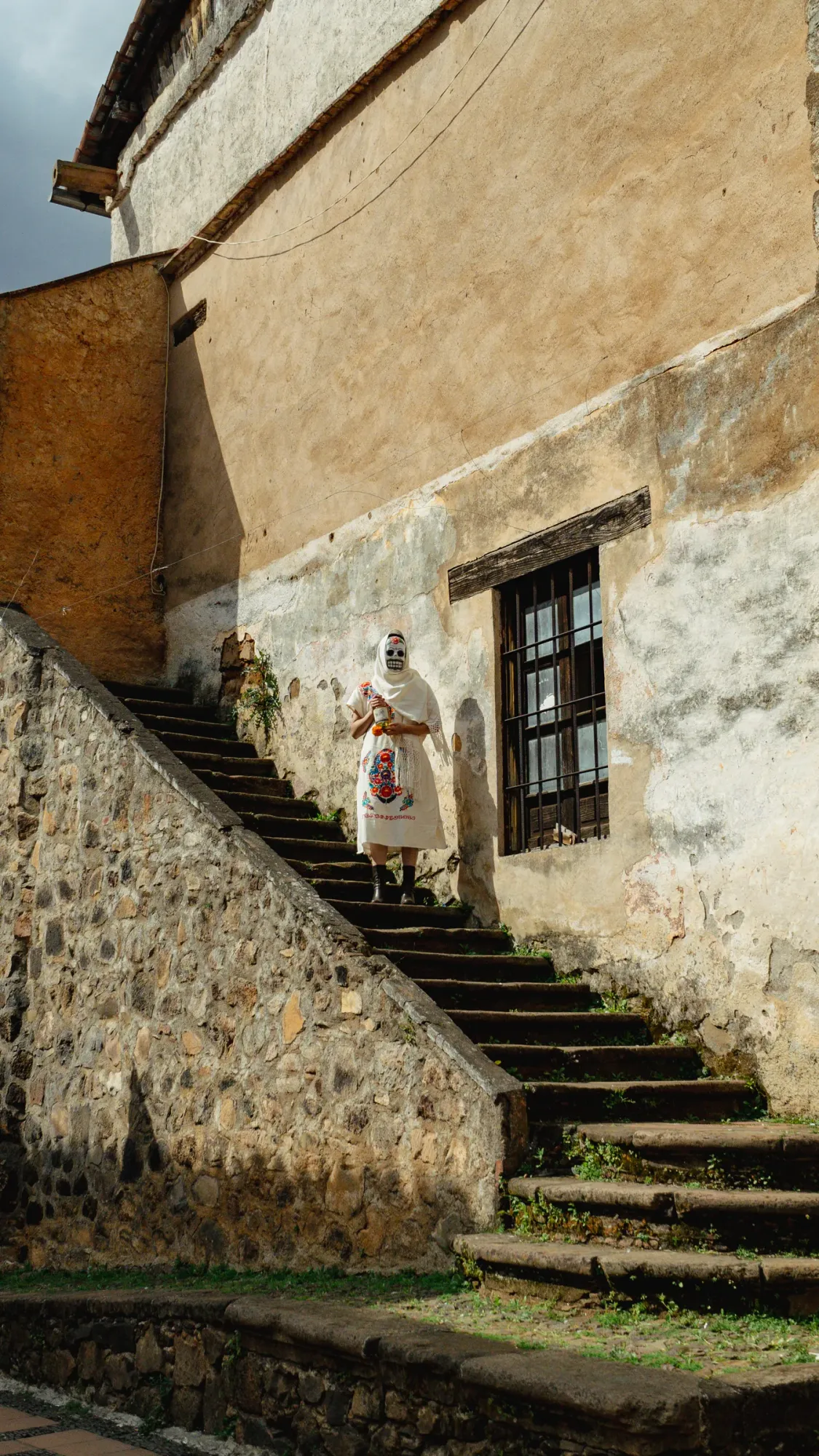
Two figures in skull masks walking through a field Stone staircase in Pátzcuaro with a figure in the background Two figures in skull masks peering through an arch

Looking back, we see this project as more than the product of a moment of chance and opportunity (being a studio in Mexico able to faithfully portray and communicate the needs of a brand based in the United States). It was a chance to channel our history and brush against the possibility of moving the viewer through the right representation of the traditions that shape what we were, are and will be, whether we are here or there.

This work is also an invitation to keep carrying Mexico’s character beyond its borders through the joint work of multicultural teams.

Production
Dos Caras
Location
Pátzcuaro, Michoacán
Date
October 2024
Camera
Sebastián del Faro
Runtime
0:40
Shoot log, October 2024.

October’s Production Chronicle

Pátzcuaro and Día de Muertos · by Paulina Aguilar

As October began and the rigorous planning process hinted that Día de Muertos was approaching, bringing with it the opportunity to unite this ancient Mexican ritual with the country’s national drink par excellence, one name came to everyone’s mind at Idilia: Pátzcuaro.

We can say with almost complete certainty that every Mexican has at some point heard or read about Pátzcuaro: a small but picturesque town in the heart of Michoacán. Despite the state’s recent negative reputation due to crime, nothing has dimmed the glow of the candles with which the people of Pátzcuaro light the path for their deceased family members to return, nor has it lessened the awe with which locals and foreigners admire the intensity of their culture and traditions.

October’s Production Chronicle

Idilia and Día de Muertos Chronicle

As October began and the rigorous planning process hinted that Día de Muertos was approaching, bringing with it the opportunity to unite this ancient Mexican ritual with the country’s national drink par excellence, one name came to everyone’s mind at Idilia: Pátzcuaro.

We can say with almost complete certainty that every Mexican has at some point heard or read about Pátzcuaro: a small but picturesque town in the heart of Michoacán. Despite the state’s recent negative reputation due to crime, nothing has dimmed the glow of the candles with which the people of Pátzcuaro light the path for their deceased family members to return, nor has it lessened the awe with which locals and foreigners admire the intensity of their culture and traditions.

Thus, it was decided that Pátzcuaro would be the perfect setting to bring together and present two cultural pillars of Mexico: Día de Muertos and Tequila Dos Caras.

The campaign was organized with two teams. The first team, consisting of Alan, Camila, José Manuel, and Diego, was tasked with integrating Tequila Dos Caras as an offering within a stylized and deconstructed version of a traditional altar de muertos. The second team, composed of Sebastián, Andrés, Ángel, and Paulina, would travel to Pátzcuaro to capture a vivid portrait of the region’s traditions.

The beginning of the Feria del Alfeñique in the city of Celaya, Guanajuato, created the perfect opportunity for the first team to gather the necessary elements for the altar: papel picado, candles, cempasúchil flowers, alfeñiques, copal, incense, and traditional food. This “curated” version of the altar aligned with the refined style of Tequila Dos Caras, creating not just a modern version of this Mexican symbol but also an offering dedicated to the bottle itself.

As part of the photo session, a tapete de aserrín was designed in warm tones, with the bottle taking center stage. This elaborate carpet, made from colored wood shavings and sometimes mixed with flowers and other natural elements, symbolizes the paths that guide the souls of the dead from the afterlife to their offerings or altars. The fragile and lightweight nature of aserrín represents the impermanence of life and the transient nature of existence.

The second team arrived in Pátzcuaro welcomed by cooler temperatures, cloudy skies, cobblestone streets, and green pine trees contrasting with red-tiled roofs. A brief scouting trip had preceded their visit, helping the team identify the most historically significant locations to tell this story.

In the morning, the group arrived at their accommodations, nestled among hills, greenery, flowers, and with a privileged view of Lago de Pátzcuaro and the Isla de Janitzio. This setting became an essential backdrop for their adventure. After packing their equipment for a day of production, the team set off for the city center.

The Mercado Taricuari, the Plaza del Artesano Urbano, bakeries, nurseries, and small local shops selling crafts and textiles provided not only the materials needed to build a small altar but also endless inspiration for the photos and videos they captured throughout the day, with traditional houses and streets as their backdrop.

At nightfall, the ofrenda took shape on a round wooden table, carefully adorned with candles, cempasúchil flowers, papel picado, incense, and copal. Traditional textiles from Pátzcuaro added vibrant textures to the altar. Nearby, a pair of traditional Mexican calaveras shared a symbolic dinner, as if engaged in a dialogue between life and death. Framed by Lago de Pátzcuaro with the Isla de Janitzio in the background, the scene unfolded under a starry night, imbuing every detail of the ritual with a mystical and solemn air.

The following morning, radiant sunshine and clear skies provided the ideal setting to continue the photo shoot. The team made the most of the natural light to capture the essence of their lodging in several significant spots, where every corner seemed to tell a different story. After wrapping up the initial shots, they returned to the city center to continue exploring.

During their journey, they visited the Casa de los Once Patios, an 18th-century former convent that now houses artisan workshops and popular art shops. In every corner of this colonial house, the tradition and creativity of Michoacán’s artisans come to life through textiles, ceramics, and hand-carved furniture. One of the patios, connected by stone corridors, provided a unique backdrop for their photographs.

Later, the team arrived at the Templo del Sagrario, one of the city’s architectural treasures. Known for its imposing cantera stone arches and baroque style, this temple is a place filled with spirituality and symbolism. Its arches, witnesses to centuries of history, framed some of the day’s most striking shots, highlighting the solemnity of the space and the enduring devotion felt within its walls.

As the afternoon wore on, the golden sunlight bathed the façades of Pátzcuaro, signaling the end of the day. Satisfied with having captured the essence of this corner of Mexico, the team began their journey back, carrying not only visual material for the campaign but also the memory of a unique experience that united the cultural roots of a community with the modern spirit of Tequila Dos Caras.

by Paulina Aguilar · 1 of 2

Pátzcuaro and Día de Muertos

The celebration of Día de Muertos in Michoacán, especially in the region of Pátzcuaro and its surroundings, is one of the most profound and meaningful cultural expressions in Mexico. This festivity, declared an Intangible Cultural Heritage of Humanity by UNESCO, merges ancient Purépecha traditions with Christian elements introduced during the colonial era, creating a syncretism reflected in every ritual, offering, and ceremony.

Over the centuries, the people of Pátzcuaro and its neighboring communities have preserved the belief that, on the night of November 1st to 2nd, the spirits of the deceased return to the earthly world to reunite with their loved ones, solidifying Día de Muertos as a celebration that transcends the ephemeral, connecting past, present, and future.

Cultural heritage and historical context

Día de Muertos in Michoacán is deeply rooted in Purépecha culture, a pre-Hispanic civilization that dominated much of western Mexico. For the Purépechas, death was not an end but a transition to another form of existence. They believed that the souls of the dead remained close and could return to the world of the living during certain moments of the year.

When Spanish colonizers arrived, indigenous traditions merged with the Christian celebrations of All Saints’ Day and All Souls’ Day, resulting in the Día de Muertos as we know it today. However, the Purépecha identity remains a fundamental part of the celebration in Pátzcuaro and surrounding areas, where the concept of death as a spiritual continuity is still alive.

Towns and communities

In the Pátzcuaro region, Día de Muertos is celebrated with a unique intensity, deeply rooted in the Purépecha cultural heritage that permeates every corner. Pátzcuaro, the heart of this festivity, was founded in the 14th century by the Purépechas, who established it as one of their most important ceremonial centers. With the arrival of the Spanish in the 16th century, Vasco de Quiroga consolidated the city as a cultural and religious center, promoting the syncretism between indigenous beliefs about death and Christian faith.

This fusion is still evident today, reflected in the colonial architecture of the historic center, where the Plaza Vasco de Quiroga, surrounded by arched buildings and tiled roofs, stands out. The Basilica of Nuestra Señora de la Salud, formerly an Augustinian convent, remains a spiritual focal point during the celebrations, along with the Casa de los Once Patios, now home to artisanal workshops that reflect local traditions. During the festival, the city transforms, with public altars adorning the squares and streets, and night processions accompanying offerings that invite the spirits of the dead to return.

Situated on Lago de Pátzcuaro, the Isla de Janitzio becomes one of the most iconic settings for Día de Muertos. The name Janitzio, meaning “corn silk” in Purépecha, alludes to its ancient pre-Hispanic heritage, which closely links the island to death rituals. The island is also home to a monumental statue of José María Morelos, built in 1933, symbolizing both indigenous history and the struggle for independence. However, it is the island’s cemetery, illuminated with thousands of candles on the night of November 1st to 2nd, that draws visitors from all over the world.

One of the most moving moments of the festival is the procession of boats across Lago de Pátzcuaro, adorned with candles and flowers, evoking the Purépecha belief that souls cross a spiritual threshold to return to the world of the living. On the island, the Danza de los Pescadores is also performed, with butterfly nets symbolizing the cycle of life and death.

Together, Pátzcuaro and Janitzio represent one of the richest expressions of Día de Muertos in Mexico. These places not only preserve ancient traditions but keep them alive through rituals and spaces that connect the spiritual with the tangible, celebrating death not as an end but as an open door to memory and transcendence.

Rituals and traditions

Nocturnal vigil at cemeteries. The most iconic activity is the vigil that takes place on the night of November 1st to 2nd. Families decorate the graves of their loved ones with cempasúchil flowers, candles, food, and personal objects that were meaningful to the deceased, and remain in the cemeteries throughout the night, accompanying the souls on their symbolic return. Isla de Janitzio is particularly famous for the boat procession with candles, crossing Lago de Pátzcuaro toward the island’s cemetery, creating a deeply moving and unforgettable sight.

Offerings or home altars. In both the city and the island, families build altars in their homes, with different levels representing the connection between the earthly and spiritual realms. Photos of the deceased, along with food, drinks, and personal objects, are placed to attract and honor the returning souls.

Ceremonial food. Food plays a crucial role in this festivity. Traditional dishes offered on the altars and shared among family members include tamales and atole; pan de muerto, a sweet bread shaped with symbolic designs representing bones and unity; and caldo purépecha, a ceremonial dish prepared in some communities.

Cempasúchil flowers. Cempasúchil flowers (Tagetes erecta) are essential in the altars and pathways to the graves, as their fragrance is believed to guide the spirits of the deceased to their families.

Indigenous dances and rituals. In towns like Tzintzuntzan and Erongarícuaro, traditional Purépecha dances are performed, accompanied by songs and music. These rituals reflect the indigenous worldview of life and death and their importance to the community.

Processions and collective offerings. In the days before and after November 2nd, processions fill the main streets of some towns, with music, flowers, and mobile altars. In places like Pátzcuaro, public squares are adorned with collective offerings made by artisans, schools, and cultural associations.

Cultural and tourist impact

Día de Muertos in the Pátzcuaro region is not only a spiritual event but also a major tourist attraction. Thousands of visitors come to the surrounding towns, drawn by the authenticity of indigenous celebrations and immersive experiences.

However, the influx of tourism has sparked debates about cultural preservation. Many communities strive to strike a balance between sharing their traditions with the world and avoiding the over-commercialization of their rituals.

The celebration of Día de Muertos in Michoacán is a fascinating combination of history, spirituality, and living culture. In the Pátzcuaro region, this festival offers a moment for both the community and visitors to connect with the memory of the departed in an environment full of meaning and ancestral beauty.

by Paulina Aguilar · 2 of 2

Credits

Client
Dos Caras
What we did
Audiovisual production
Creative direction
Sebastián del Faro
Videography
Andrés Hernández
Shoot log
Sebastián del Faro
Photography, studio session
Alan Macías
Art direction, studio session
Camila (@mila_cammila)
Copywriting
Paulina Aguilar, Ángel Zamarroni